
Cashout regret can stay with a bettor longer than the match itself. The game ends, the score is final, and the group chat moves on to another topic, but one person is still staring at the old slip like it betrayed him. He cashed out too early, then watched every remaining leg win.
That feeling is hard to explain to someone who was not there. The bettor did not lose in the normal way. He saved something, but also missed more. That half-win can feel worse than a clean loss because the mind keeps saying, “I should have waited.”
The Button Looks Kind
The cashout button often looks kind when pressure rises. A team is holding a slim lead. A striker has missed two good chances. The odds keep changing. The phone offers a smaller amount now, and the bettor starts thinking it may be better to leave with something.
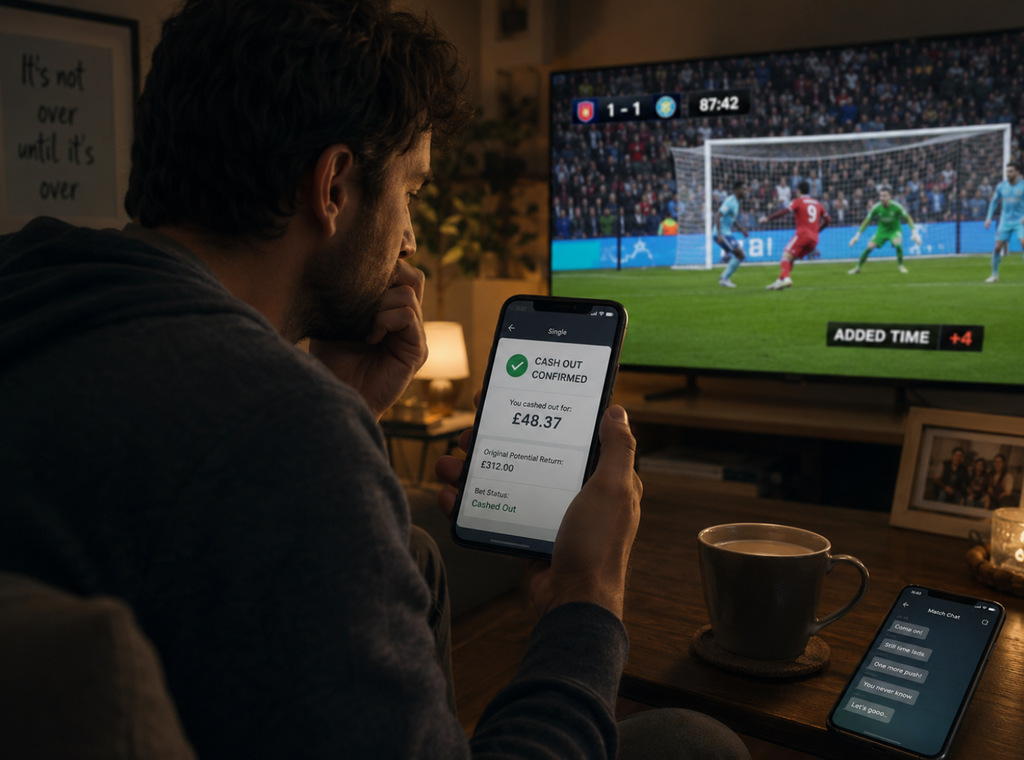
That choice can make sense. Cashing out is not foolish on its own. Sometimes it protects a person from late drama. Sometimes it helps a bettor keep the night light. A small return may be better than watching one weak team ruin the whole slip.
The problem starts when the button becomes a panic move. A person may cash out because the room is loud, the chat is shouting, or one friend says the match feels cursed. That is not always calm thinking. That is fear wearing a clever face.
A better habit is to decide early. Before the match starts, the bettor can ask, “Would I cash out if this slip reaches a certain point?” That way, the choice is not made only because the heart is racing.
Regret Starts After the Whistle
Cashout regret usually waits until the final whistle before it starts talking. While the game is still on, the bettor may feel safe. He may even feel smart. He has taken a return, avoided danger, and saved himself from a possible loss.
Then the last goal comes. The final corner is cleared. The team that looked shaky somehow survives. Suddenly, the old slip would have landed. The amount on the screen becomes a ghost, and that ghost is rude enough to stay all night.
This is why cashout regret has a long memory. It does not only remember the result. It remembers the moment the bettor pressed the button. It remembers the friend who said, “Take it now.” It remembers the minute, the score, and the tiny pause before the choice.
Still, regret can lie. It shows the ending after the risk is gone. It makes waiting look easy because the bettor already knows what happened. Real betting never gives that comfort before the result.
Casino Choices Bring Same Feeling
Casino play can bring a similar kind of regret. A player may leave a game, then wonder if the next round would have paid. Another may stay too long after a small win and wish they had stopped earlier. A person taking a short break on Hellspin may know that feeling well, especially when one more round sounds harmless in the moment.
That is why small limits matter. They protect the player from turning every choice into a long argument with themselves. A planned stop feels cleaner than a stop made from fear, pride, or tired hope.
Casino and sports betting both work better as sustainable entertainment when the player keeps the stake small and the plan clear. The aim should be a light break, not a heavy memory.
Friends Never Let It Rest
Group chats make cashout regret louder. A person can suffer quietly alone, but friends will give the regret a full name, a date, and a screenshot. Someone will save the slip. Someone will bring it back next weekend. Someone will say, “This is why you never trust him with cashout advice.”
It is annoying, but it is also part of the humour around betting groups. Friends turn pain into a story. The person who cashed out too early becomes the evening’s lesson, even if everyone else would have done the same thing under pressure.
Good friends should still know the line. Teasing is fine when the stake was small and nobody is hurt. It becomes unfair when the jokes push someone into bigger bets later, just to prove courage. A betting group should make the match more fun, not make anyone feel trapped by pride.
Better Cashout Habits Feel Quieter
The best cashout choices often feel quiet. They are not made to impress friends. They are not made to prove fear or bravery. They are made because the bettor had a plan before the match became noisy.
A person may decide to cash out only when the return reaches a set amount. Another may decide never to cash out unless team news changes the whole picture. Someone else may use cashout only to protect a slip with many legs. The rule itself can differ, but having a rule helps.
Good betting spaces should treat players like valued guests. That means plain rules, fair tools, clear bet history, and simple ways to pause. A player should not feel rushed by the screen or mocked by the moment.
Extended entertainment value comes from control. A person who keeps the stake light can live with either choice. If they cash out and the slip lands, it becomes a joke. If they wait and the slip loses, it stays inside the budget.
Let Regret Lose Its Seat
Cashout regret will always find a chair in the room. It will sit there after late goals, missed chances, and slips that almost became perfect stories. That is part of betting.
But regret does not have to run the night. Set the plan early, keep the stake small, and accept that no button can see the future. A calm choice may still sting later, but it is easier to carry than a rushed one.